


The American aggression against Iran has proven so costly for the United States and its Western allies that the wave of condemnation continues to get more intense. Amid this dynamic, the hollow threats issued by Donald Trump against Iran signify less a show of power than a profound disconnect—both within himself and among his ideological peers—from the fundamental tenets of diplomacy and an understanding of complex international relations. Reactions to this conduct have not been confined to America’s traditional adversaries; even within certain Western political and security circles, serious criticism has emerged regarding the reliance on coercion and the disregard for dialogue. Taken together, these critiques paint a portrait of a foreign policy marred by deep contradictions and a distinct lack of depth.
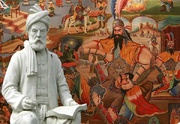
Under these circumstances, what stands out above all is the vast chasm between two distinct approaches to politics and power. On one side lies the deep-rooted logic of a civilization that has, over centuries, anchored its survival and advancement in strategic patience, rationality, and a precise grasp of geopolitical equilibrium. On the other side stands an approach grounded not in calculation and prudence, but in impulsivity, intimidation, and media spectacle. These two approaches differ not merely at the level of political tactics; rather, they represent two fundamentally divergent understandings of the nature of power and its application within the international system.
Historical experience has repeatedly demonstrated that while the language of force may yield unrealistic short-term gains, it not only fails to secure long-term strategic objectives but also imposes heavy costs on its architects. From costly and protracted wars of attrition to the erosion of international credibility and the depletion of soft power assets, these are the inescapable consequences of an approach that sidelines diplomacy in favor of hard instruments. Conversely, nations that have managed to strike a balance between hard and soft power, and which employ dialogue as a mechanism for crisis management, have typically enjoyed greater stability and more enduring influence.
Within this framework, Iran's conduct in the face of pressure and threats is of particular significance. Iran has sought, by drawing upon its civilizational heritage and leveraging historical experience, to shift the arena of confrontation from a purely military plane to a broader strategic field—one in which legitimacy, public opinion, and narrative construction play decisive roles. In such an arena, the mere possession of superior military might does not guarantee victory; instead, the capacity for persuasion and fostering international empathy become the key determinants of success.
From this vantage point, global reactions to recent developments can be interpreted as indicative of a gradual shift in public perception regarding unilateralist policies. Even within Western societies, voices have emerged warning against the exorbitant costs of military interventionism and the disregard for established international norms. While these voices may not yet constitute the dominant discourse, they reflect a growing skepticism and a reappraisal of the efficacy of traditional, force-based approaches.
Concurrently, the concept of a "rules-based order"—long upheld as a central pillar of Western political discourse—is confronting serious challenges. When these rules are applied selectively and, in practice, become subservient to the short-term interests of major powers, it is only natural that they forfeit their legitimacy. Under such conditions, one can no longer expect other actors in the international system to readily accept or adhere to this order.
Indeed, what is unfolding today transcends a transient crisis or a limited confrontation. This situation must be analyzed within the context of a broader transition in the international system—a transition in which traditional notions of power, legitimacy, and sovereignty are being redefined. In this shift, nations capable of adapting to new realities and employing a more diverse array of tools to advance their interests will find themselves in a more advantageous position.
In this context, the role of public opinion has gained unprecedented significance. In a world where information flows at breakneck speed, reality can no longer be fully controlled through one-sided narratives. Diverse images, reports, and analyses are instantly accessible to global audiences, enabling comparison and informed judgment. This reality has significantly narrowed the operational space for policies reliant on secrecy or the distortion of facts.
Furthermore, one must not overlook the fact that the persistence of threat- and pressure-based approaches can fuel instability at both regional and global levels. History shows that an accumulation of crises can eventually reach a tipping point beyond the control of any single actor. Consequently, a return to the path of dialogue and the pursuit of political solutions appears not merely as a choice but as an inescapable necessity.
Ultimately, what renders this confrontation particularly meaningful is the clash of two worldviews. One view perceives dialogue not as a sign of weakness but as a tool for the intelligent exercise of power, premised on the belief that more sustainable outcomes can be achieved through engagement and mutual understanding. The other view confines power to the monopoly of hard instruments, imagining that will can be imposed upon others solely through pressure and threats.
History, however, has repeatedly proven how profoundly misguided this latter assumption can be. Power resting solely on force, however effective it may seem in the short run, will inevitably face severe challenges over the long term. Conversely, power that successfully integrates legitimacy, rationality, and the capacity for persuasion will enjoy far greater resilience and depth.
On this basis, it can be argued that what is observed today in the confrontation between Iran and the United States is, in fact, a manifestation of a deeper and wider trend—a gradual global shift away from unilateralist patterns and towards more balanced arrangements. On this trajectory, nations that adeptly harness their civilizational, cultural, and political capacities will play a more effective role in shaping the future of the international order.
In conclusion, it must be emphasized that this confrontation reflects two divergent worldviews: a world centered on rationality, dialogue, and mutual respect, set against a world shaped by domination, threats, and disregard for others. Whatever the outcome of this contest, it will undoubtedly leave a profound imprint on the future of international relations. Yet, if history serves as our guide, one can anticipate that the scales will ultimately tip in favor of an approach grounded in rationality and legitimacy.
MNA









Your Comment